Writing · The audit
Your homepage has ten seconds to win the enquiry
Visitors often decide within seconds whether to stay on your homepage. Here is what has to be visible in that window, and what quietly loses you the enquiry.
Ricky Bell · 26 September 2026 · 4 min read
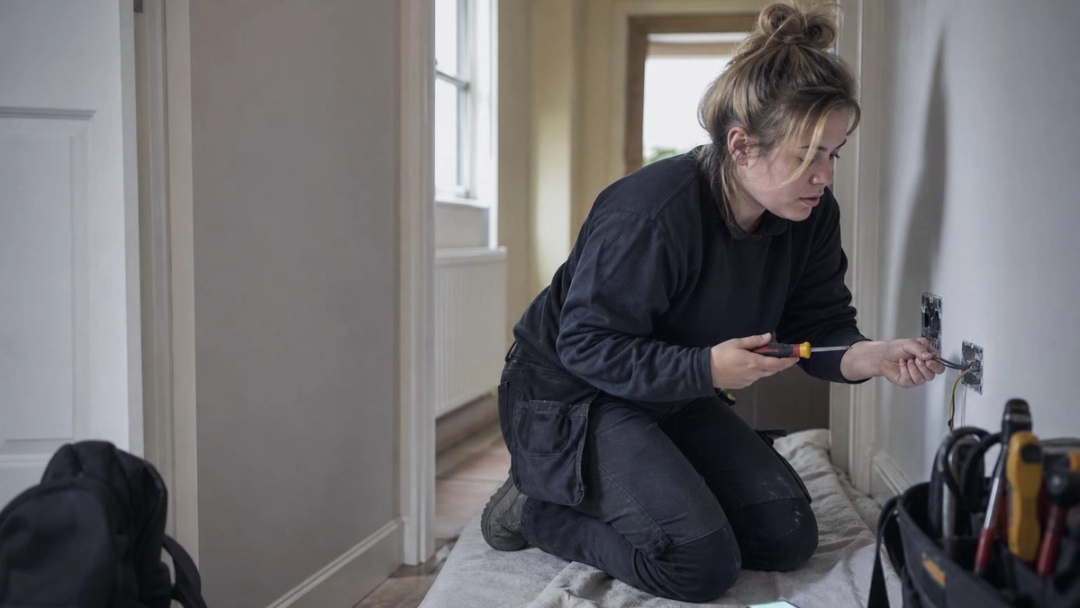
Someone searches for a plumber in Glasgow, taps the third result, and lands on your homepage. Within a few seconds they have either decided you might be the one, or they have gone back to the results page. That decision is rarely about how pretty the site is.
Jakob Nielsen's work at Nielsen Norman Group put numbers on it: "Users often leave Web pages in 10-20 seconds, but pages with a clear value proposition can hold people's attention for much longer. To gain several minutes of user attention, you must clearly communicate your value proposition within 10 seconds." You can read the full piece on how long users stay on web pages. Ten seconds is not long enough to read your About page. It is barely long enough to read a headline and glance at a phone number.
So the homepage is not a brochure. It is a very short conversation, and there are four things that decide how it goes.
Say what you do, plainly, at the top
We audit a lot of small business sites, and a common failure we see is a headline that says nothing. "Excellence, delivered." "Your trusted partner." A visitor cannot tell from that whether you fit boilers or do bookkeeping.
The fix is unglamorous. Put what you do, who you do it for, and where, in the first thing people see. "Gas Safe boiler repairs and servicing across Glasgow and Lanarkshire." That sentence does more work than a full page of polished copy underneath it, because it lets the visitor decide in the ten seconds they were going to give you anyway.
Make contacting you the easiest thing on the page
The 2015 B2B Web Usability Report asked buyers what made them leave a supplier's website: "When asked what causes them to leave a vendor website, 44% of survey respondents indicated 'No Contact Information / Phone Number.'" Nearly half. Not because the copy was weak, but because they could not find a way to get in touch.
A phone number in the header, tappable on a phone. An email address you actually read. Some guidance on price, even a range, because people want to know before they call. None of that needs a redesign.
Trust sits alongside contact. Checkatrade's Review-fluence research reported that "90% admit to relying on reading reviews to help them make a purchasing decision." A few genuine reviews on the homepage answer the question the visitor is silently asking while they hover over your number.
Speed is the enquiry you never hear about
Google's ad team put it bluntly in The need for mobile speed: "53% of visits are likely to be abandoned if pages take longer than 3 seconds to load". Those people do not bounce and email you later. They are gone and you never know they existed.
This matters more on phones than you might assume. Ofcom's Adults' Media Use and Attitudes 2026 Report found that "One in five (20%) online adults rely solely on a smartphone for access." For a fifth of your potential customers, the mobile homepage is not a lesser version of your site. It is your site.
Usually the cause is mundane: enormous uncompressed images, a pile of plugins, a slideshow nobody asked for. Strip those and the page gets faster without anything else changing.
The first impression happens before the click
Many visitors arrive from search. BrightEdge's research found that "68% of all trackable website traffic is sourced from organic traffic and Paid Search, vastly exceeding all other channels, including Display and Social Media. The Organic Search figure at 53% is up from the 51% found in the 2014 research".
Which means the snippet in the results page is really your first line, not your headline. Backlinko's analysis is worth knowing here: "our large-scale analysis of 4M Google search results found that pages with a meta description had an average of 5.8% more clicks vs. pages that were missing their meta description". Writing your own description for the homepage takes ten minutes and earns you clicks you were otherwise handing to a competitor.
None of this is a rebuild. It is a headline, a phone number, some images resized, and a sentence written for the search results. Four small jobs in an afternoon.
If you would like a second pair of eyes on how your homepage handles those first seconds, ask us for a free website audit and we will tell you plainly what we see.
Frequently asked
How long do I actually have to make an impression?
Nielsen Norman Group reported that users often leave web pages in 10 to 20 seconds, and that to gain several minutes of attention you must clearly communicate your value proposition within 10 seconds. That means your headline has to name what you do and who it is for. Everything else can wait until they have decided to stay.
Does putting my phone number on the homepage really change anything?
Yes. The 2015 B2B Web Usability Report found that 44% of survey respondents indicated "No Contact Information / Phone Number" as a reason they leave a vendor website. Putting a tappable number in the header costs nothing and removes a very common reason people give up on you.
How fast does my site need to be?
Google found that 53% of visits are likely to be abandoned if pages take longer than 3 seconds to load. On mobile that matters even more, because Ofcom's Adults' Media Use and Attitudes 2026 Report found one in five (20%) online adults rely solely on a smartphone for access. Compressing images and removing unused plugins usually gets you most of the way there.
Is it worth writing my own meta description?
It is one of the quickest wins available. Backlinko's analysis of 4M Google search results found pages with a meta description had an average of 5.8% more clicks than pages that were missing their meta description. Since BrightEdge found the Organic Search figure at 53% of all trackable website traffic, that snippet is often your genuine first impression.
Should I show reviews on the homepage?
Checkatrade's Review-fluence research found that 90% admit to relying on reading reviews to help them make a purchasing decision. Putting a few genuine ones near your contact details answers the trust question at the exact moment someone is deciding whether to call. They do not need to be long, just real.